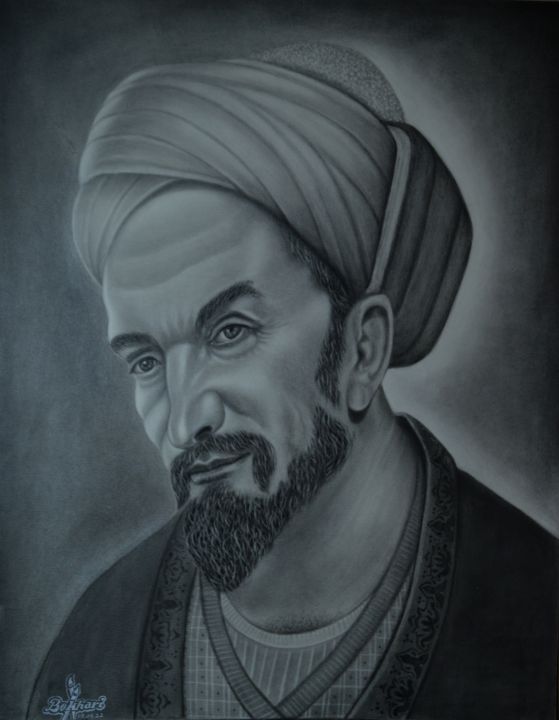
What Saadi Teaches Leaders About Legacy
Centuries before leadership frameworks, performance dashboards, and corporate values statements, the Persian poet Saadi captured a truth that remains deeply relevant to modern organizations.
In one of his most enduring lines, he writes:
- “Saadi marde nekūn namīrad hargiz; morde ān ast ke nāmash be nekūyi nabarand.”
Roughly translated: A good person never truly dies; the one who dies is the one whose name is not remembered with goodness.
At first glance, this verse appears philosophical, even poetic in the abstract. But read through a leadership lens, it offers a remarkably practical insight into how influence, reputation, and legacy are built—inside organizations and beyond them.
Saadi, Briefly
Saadi of Shiraz, writing in the 13th century, was not merely a poet. He was a keen observer of human behavior, power, ethics, and society. His work Golestān blends storytelling, moral reflection, and social commentary—often with striking clarity and restraint.
What makes Saadi enduring is not sentimentality, but precision. His observations cut through time because they speak to how people remember one another long after formal authority disappears.
For leaders, that question—how you are remembered—is not philosophical. It is operational.
Leadership Beyond Titles
In business, leadership is often defined by role, scope, or results. Titles confer authority. Targets validate performance. But neither guarantees legacy.
Every organization has leaders who delivered results yet left little behind. When they depart, processes continue, but culture erodes. People comply, but they do not remember.
Saadi’s verse draws a clear distinction: what endures is not position, but character as experienced by others.
In modern terms, legacy is not what leaders achieve, but what they embed.
How Leaders Are Actually Remembered
Ask people about a former leader years later, and the responses rarely focus on strategy documents or quarterly results. Instead, they recall:
- How decisions were made under pressure
- Whether fairness was consistent or selective
- Whether people felt trusted or controlled
- Whether success was shared or personalized
- Whether dignity was preserved, especially in difficult moments
- These experiences form reputational memory—the equivalent of Saadi’s “good name.”
From an organizational perspective, this memory directly affects engagement, retention, and the willingness of people to go beyond minimum expectations.
The Business Meaning of “A Good Name”
In a corporate setting, having one’s name remembered with goodness translates into three tangible leadership outcomes:
- Trust That Outlives Authority
When leaders act with consistency and integrity, trust persists even after they leave. Teams continue operating with shared norms rather than requiring constant oversight.
Cultural Continuity
Leaders who model values through behavior—not slogans—leave behind cultural standards that others replicate. This is how culture survives transitions.
Voluntary Commitment
People give discretionary effort not to systems, but to leaders they respect. Long after formal reporting lines disappear, influence remains.
This is Saadi’s immortality applied to organizations: influence that continues without presence.
Why Results Alone Are Not Enough
Modern leadership discourse often elevates outcomes above all else. Results matter—there is no argument there. But results without relational credibility are fragile.
Organizations that prioritize performance without regard for how it is achieved often experience:
- Short-term wins followed by long-term instability
- High talent churn despite strong financials
- Cultural resets disguised as “transformations”
- In these environments, leaders may be successful on paper, but forgotten—or remembered poorly—once they exit.
- Saadi’s warning is subtle but firm: existence without positive remembrance is a form of organizational death.
- Applying Saadi’s Insight as a Leader
For leaders seeking to translate this wisdom into practice, the question is not abstract morality, but daily behavior.
A few practical reflections:
How do people experience your decision-making? Transparent reasoning builds respect; arbitrary authority erodes it.
How do you treat people when outcomes are uncertain or unfavorable? Character is most visible when stakes are high.
Do people feel seen as contributors, or merely as resources? The distinction determines loyalty.
When you leave a role, what remains clearer than before? If nothing endures, influence was positional, not personal.
Leadership legacy is built incrementally, through thousands of small interactions rather than a few defining moments.
The Enduring Relevance of an Old Verse
Saadi’s insight endures because it speaks to a truth organizations still grapple with: success is temporary, but reputation compounds.
Leaders who focus only on results may move quickly. Leaders who focus on how results are achieved move organizations forward sustainably.
In the end, titles end. Strategies evolve. Markets change. What remains is how leadership was experienced.
That is the difference between being present—and being remembered.
Final Reflection
A leader does not truly leave an organization when they step away. They leave through what continues to guide behavior after they are gone.
As Saadi reminds us, the measure of a life—or a leadership tenure—is not longevity, but the goodness attached to one’s name.
In business, that goodness is called trust, fairness, and respect. And it is one of the few competitive advantages that does not expire.